
“Extraordinary Ordinary Things” is dedicated to bringing to mind truly world-transforming things that have become so embedded in daily life that we scarcely even notice them. These two ideas may seem to be rather far apart, if not incongruous. In reality, they are quite close together, almost like conjoined twins. Computers today underlie virtually everything that makes up the modern world, either directly or, more often, indirectly, by enabling commercial, cultural, and scientific ideas to be converted into life-altering products and services.
Extraordinary!
“Sorry, I have to hang up. My battery is running low.”
How often have you heard this phrase? How often have you uttered it yourself?
The fact is, today the world runs on batteries. And not just for ubiquitous smartphones, which seem to be in everyone’s pocket or purse, if not in their hands, the majority of the time. It doesn’t take much of a vivid imagination to picture someone even sleeping with a smartphone. Lovingly cradled in their hand, dreaming about the next time they will use it, which could easily be within minutes, if not seconds, after waking up. Provided that the battery isn’t running low.
Batteries, of course, existed long before the smartphone. They were essential for replacing wick-burning lanterns with flashlights (torches). And even for powering pioneering automobiles in 1828. Yes, 1828! (see below). However, ever since smartphones transmogrified from telephony into “pocket computers,” they have become as essential to daily life as food and drink.
For these and other reasons, I believe the battery truly deserves a secure place on the list of what I like to call “extraordinary ordinary things.”
History of the Battery
Nigel Taylor, battery consultant and scientific advisor with decades of experience in the automotive industry, provides a brief but illuminating history of the battery.
Like many other things in science and technology, the battery derives from fundamental discoveries about the physical world made before the idea of the battery and its first practical realization were ever conceived.
Some of the key events in the conceptualization and development of the battery to its modern state are the following:
- Leyden jar (1744). Named after Ewald Georg von Kleist, a Dutch scientist who worked in Leyden, The Netherlands, this device stored static charge in a glass jar lined on the inside and outside with metallic foil.
- Battery (1748). The first use of the term “battery” to designate a device for storing electrical energy is attributed to American polymath Benjamin Franklin. He called his invention a “battery” (meaning a line-up of military weapons) because his apparatus consisted of several glass Leyden jars grouped together in rows like cannons in an artillery unit. However, Franklin’s device was not a battery in the modern sense, because while it could store electrical charge, it could not release it in a controlled manner to do any useful work.
- Voltaic pile (1800). Created by Italian scientist Alessandro Volta, this early electric battery in the modern sense was able to produce a reliably steady electric current (flow of electric charge). It did so by initiating a chemical reaction inside the device that released a flow of electric charge on demand. Thus, while it more properly should be called a “volta” or a “VP” (voltaic pile), Franklin’s term “battery” (which he never claimed to be a battery in the modern sense) somehow won out.
- Electrolysis (1807). Testing the chemical effects of direct electric currents, English scientist Sir Humphry Davy is the first to isolate elements (potassium, sodium, and later barium, calcium, and magnesium), essentially creating a new field—electrochemistry.
- Mass production (1802). Scottish scientist William Cruickshank designs the first electric battery, known as the Cruickshank trough, for mass production.
- Electric car (1828). Scottish inventor Robert Anderson constructs a functional electric car by installing an electric motor and a non-rechargeable primary cell onto a carriage.
- First rechargeable battery (1859). French scientist Gaston Planté invents a rechargeable lead-acid battery. Previous batteries had to be completely replaced when they stopped producing an electric current.
- Battery swapping (1907). The London Electrobus Company operates between London’s Victoria Station and Liverpool Street, swapping battery packs at midday to extend the operation of its buses.
- Sputnik 1 (1957). The first battery is used on an orbital spaceflight.
- Apollo 11 (1969). Duracell batteries are used aboard the spacecraft and power the timer of the Passive Seismic Experiment Package left at Tranquility Base on the Moon.
- Lithium-ion rechargeable cell (1991). Sony releases the first commercial lithium-ion battery.
- First mass-produced electric vehicle (1996). General Motors begins selling the GM EV1, which has a 16.5kWh lead-acid battery pack, giving the car a range of 60 to 100 miles.
- First mass-produced hybrid vehicle (1997). Toyota brings to market the world’s first mass-produced hybrid vehicle. The first-generation Prius uses a 274V NiMh battery pack.
- First highway-legal fully electric vehicle (2008). The Tesla Roadster runs on a lithium-ion battery cell providing a range greater than 200 miles per charge.
As this highly truncated list suggests, development of what is commonly considered to be a “battery” has gone through numerous fundamental phases. And development continues. For example:
- Smart batteries. Small computer chips are introduced that allow the battery to inform its host computer of its current charge status. A great idea, right? Yes. However, on the other hand, the addition of chips creates a new cybersecurity vulnerability. Unless they are introduced in such a way that they can’t be hacked.
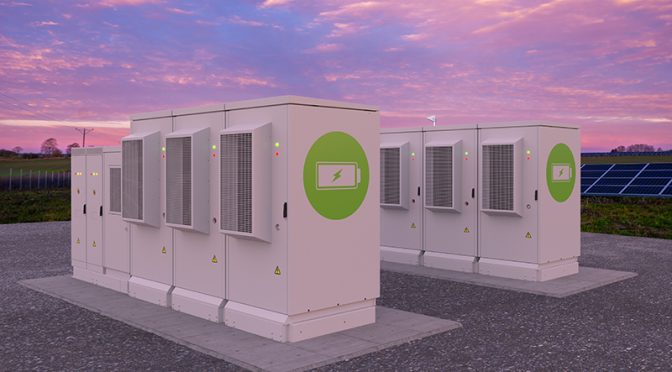
- Battery farms. Battery technology has now grown to enable very large battery “farms.” The purpose is storing electricity generated during the day to be used at night when daytime sources are offline. But as with the 2025 Moss Landing battery conflagration in Monterey County, CA, this has also created a public hazard. Because the lithium batteries used are prone to fires that cannot be easily extinguished. These lithium batteries also have extensive computer chips monitoring them to prevent fires.
Today, of course, we must also face the hazards of increasingly powerful large batteries used in electric vehicles. These hazards pertain to any stage of a recovery/repair process. In particular, a compromised EV battery can catch fire, short-circuit, and explode even when lying idle in storage. Increasingly improved EV battery design over recent years has made the risk of such hazards exceedingly small.
However, the rising use of EVs on the road means an increasing number of occasions of such untoward events.
For example, in a 2024 InsideEVs trends article, Iulian Dnistran wrote:
The upswing in sales and use of EVs is expected to continue apace at least through 2029.
Batteries and Computing
Today, if you mention the word “computer” to anyone in the general public (not computer professionals), most of them will probably automatically think of laptops, because this is the kind of computer they think they most often use. As noted earlier, they probably ought to be thinking of their so-called “smartphones,” which in fact are portable computers for which telephone calls are only one, and probably a declining, use.
When you consider that ENIAC, the first electronic computer, was built in 1945 and weighed some 27 tons (24,494 kilograms), the idea of a portable device probably never even entered these experts’ imaginations.
The creation of portable computers over the past 80 years depended on numerous scientific advancements. But certainly, a key advance was the development of smaller and smaller and increasingly reliable batteries.
In the history of portable computers, there is a distinct and critical line of demarcation.
The first portable battery-operated computers functioned on non-rechargeable, use-once-then-throw-away batteries. The real takeoff of portable computers occurred only with the development of small, rechargeable batteries. Such that when they ran out of juice, it was only necessary to plug them into an electric outlet to recharge them. The day may yet come when the physical act of plugging in to recharge will no longer be necessary. Wirelessly rechargeable mice already exist. Can wirelessly rechargeable computers be far behind?
Quotations about Batteries
You can often learn a lot about the impact of an invention on society by listening to what people have said about it during its evolution and integration into daily life. Here are several pithy quotations about batteries that prove the point.
“Give children toys that are powered by their imagination, not by batteries.”—H. Jackson Brown, Jr.
“Reading allows me to recharge my batteries.”—Rahul Dravid
“Books don’t need batteries”—Nadine Gordimer
“Whenever I am with energetic young people, I feel like a recharged battery.”—Nelson Mandela
“I once bought my kids a set of batteries for Christmas with a note on it saying, toys not included.”—Bernard Manning
“How come everything I need always comes with batteries?”—John Mayer
“The depressing thing about battery technology is that it gets better, but it gets better slowly.”—Nathan Myhrvold
“Toys are made in heaven, batteries are made in hell.”—Tom Robbins
Post Scriptum
The degree to which the idea of the battery has entered the public consciousness can be found in the phrase “recharge one’s batteries,” meaning to take a break in order to regain energy before returning to an arduous task.
Although there are earlier references (going back to the 1890s), popularization of the idiom is generally attributed to former Prime Minister of the United Kingdom and prolific author Sir Winston Churchill. It is found in letters written to his beloved wife, Clementine. Somewhat ironically, his use of the phrase came to light not through his own writings, but through those of his daughter Mary Soames, who cited it in her popular biography of her mother, Clementine Churchill: The Biography of a Marriage (1979).

image sources
- Battery Energy Storage System near a photovoltaic farm: Credit: MikeMareen